

Why Are Allergy-Friendly & Free-From Products So Expensive?
Share
Free-from household and laundry products, such as allergy-friendly and plastic-free ranges, often cost a fair bit more than their mainstream alternatives.
But why?
Scale isn’t the whole story
For many smaller brands, a small production run costs more per item than mass production. But that can’t explain everything. Ecover, now owned by a huge multinational, makes its products at scale, yet they still carry a premium price tag and come in a lot of plastic.
Ingredients: what’s in, and what’s left out
Alternative botanical ingredients can cost more, but leaving out fragrance can bring costs down. And is fragrance always that necessary?
The cost of proving it
Claims such as vegan, allergy-friendly and dermatologically tested all need substantiation, testing and often very costly official certification. It can feel like being penalised for trying to do good!
When the price tag is just marketing
Then there’s the other side of the story. Through clever marketing, some brands deliberately position free-from products as healthier, specialist or luxury, when the ingredients and production costs don’t reflect the price, we reach into our pockets for.
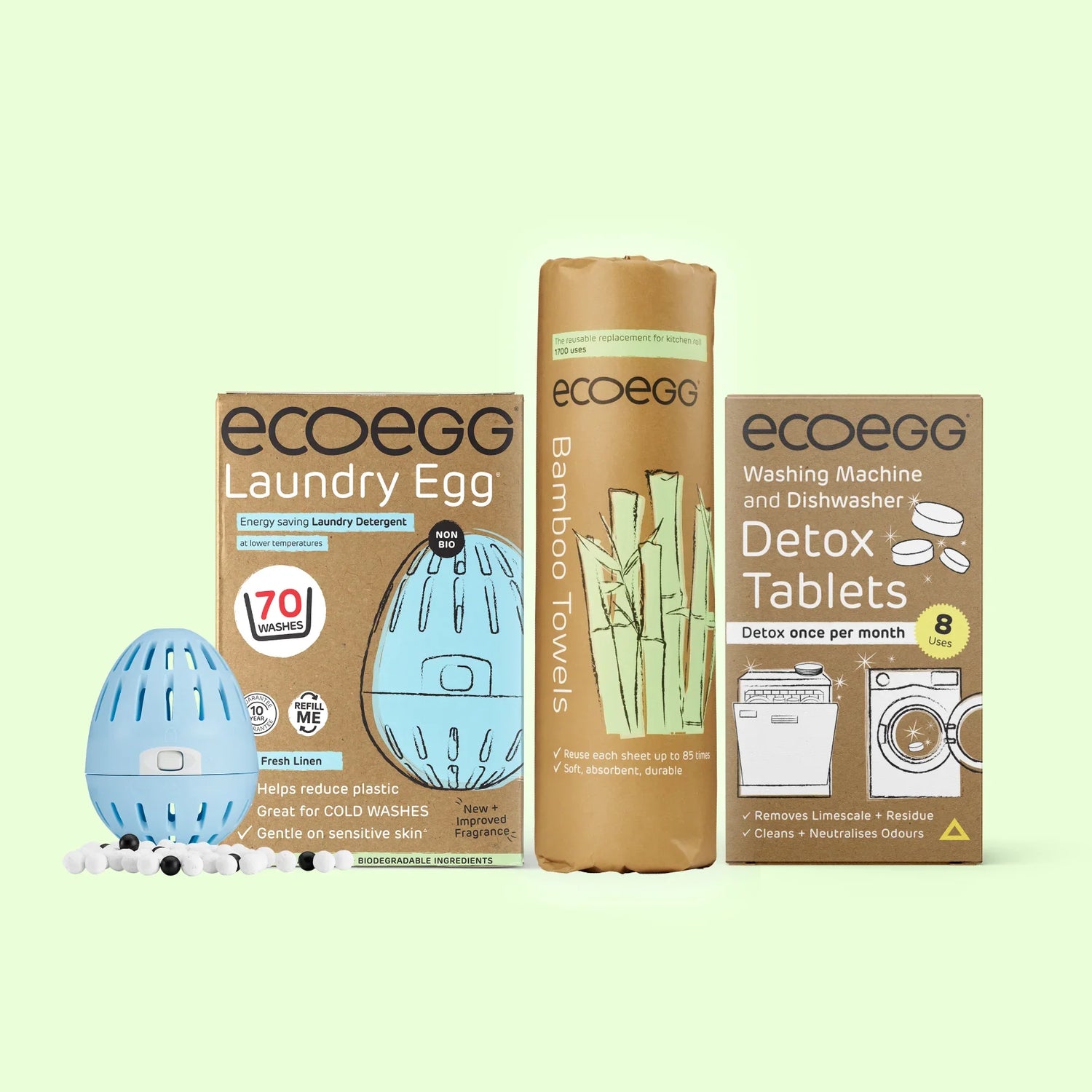
At Ecoegg, we’ve always stood behind honest marketing. We create specialist, free-from products with more luxurious ingredients, but never with a fake high price tag. Our Laundry Detergent Eggs still offer a very competitive price per wash, especially with our refills subscription model, making every wash as little as 7p.
Read the label carefully
“Free-from” doesn’t automatically mean safer, more sustainable or kinder to your skin or the environment. What matters is what remains in the formulation. If a product is free from known unpleasant chemicals, what has replaced them?
And the ingredients may be free from the known nasties, but is the packaging?
The compostable catch
If you’re paying more for sustainable packaging, check the detail on how to dispose of it, especially if it’s labelled “compostable”.
Is it home compostable? If so, it has a real chance of breaking down in your own compost. Many compostable products aren’t. They need an industrial process, which means sending them to a specialist composting facility. Do you know where your nearest one is?
Sadly, this can defeat the point of paying extra. Sent to landfill, a product that’s only industrially compostable probably won’t break down at all. ☹
To find a composting facility near you, visit r-e-a.net.